
Building an emergency fund is one of the most important steps toward financial stability. It gives you money to use when unexpected expenses come up, such as a car repair, medical bill, job loss, or urgent home repair. However, saving the money is only part of the process. You also need to decide where to keep your emergency savings.
The right place should keep your money safe, accessible, and separate from your everyday spending. At the same time, it should allow your savings to earn some interest while you wait for an emergency to happen.
What Makes a Good Place for Emergency Savings?
Before choosing an account, consider three important factors: safety, accessibility, and interest.
1. Safety
Your emergency fund is money you may need at an important moment. You generally don’t want to put it somewhere that could lose significant value when you need it.
For this reason, traditional savings accounts, high-yield savings accounts, and other deposit accounts can be suitable choices for emergency savings.
2. Easy Access
An emergency fund should be available when you actually need it. If your car breaks down or you suddenly lose your income, you don’t want to wait weeks to access your money.
Look for an account that allows relatively easy withdrawals or transfers without complicated restrictions.
3. Earning Interest
Although emergency savings should be safe and accessible, it doesn’t mean the money has to sit there doing nothing. An interest-bearing account can help your balance grow over time.
Even a modest interest rate can make a difference when you consistently keep money in the account.
Best Places to Keep Emergency Savings
There are several options you can consider depending on your financial situation and how quickly you may need access to the money.
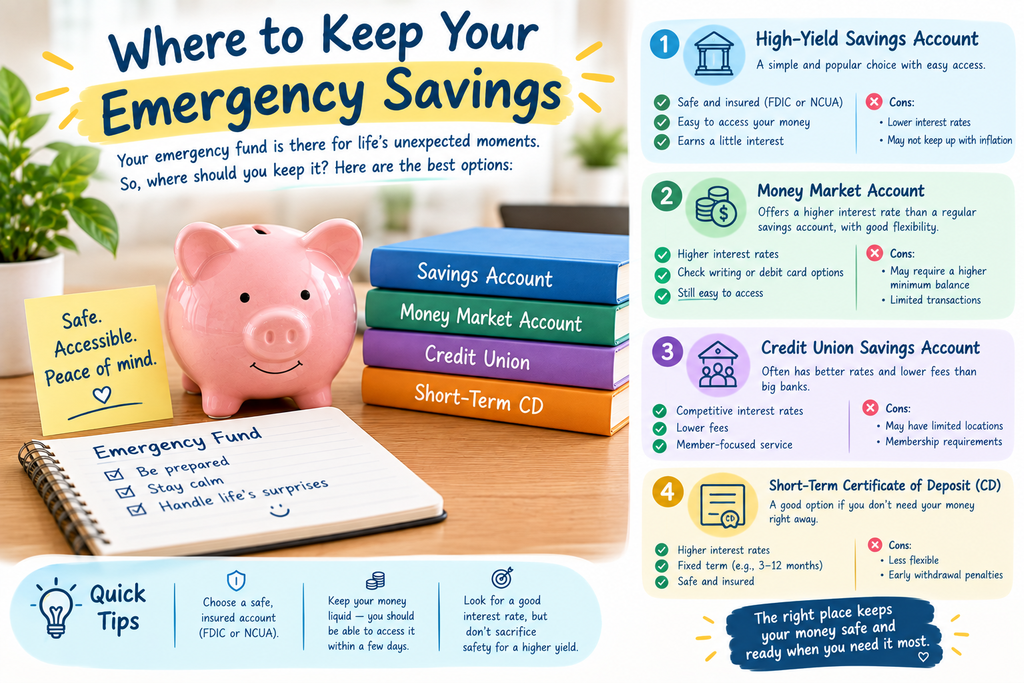
1. High-Yield Savings Account
A high-yield savings account can be a strong option for an emergency fund because it combines accessibility with the potential to earn more interest than many traditional savings accounts.
You can usually access your money through transfers or withdrawals while earning interest on your balance.
For example, imagine you have $5,000 in emergency savings. Instead of keeping it in an account that pays little or no interest, you could consider a savings account with a more competitive rate.
The exact interest rate offered by banks can change, so compare current rates and account terms before opening an account.
2. Traditional Savings Account
A traditional savings account is another straightforward place to keep emergency savings.
The main advantage is simplicity. If you already have a savings account with a bank or credit union, you may be able to keep your emergency fund there without opening another account.
However, some traditional savings accounts offer relatively low interest rates. If earning interest is important to you, compare the account with other available options.
3. Money Market Account
A money market account can also be considered for emergency savings. Depending on the financial institution and account, it may offer interest while providing access to your money through transfers, withdrawals, or other features.
Some money market accounts may have minimum balance requirements or other conditions, so make sure you understand the rules before using one for your emergency fund.
4. Credit Union Savings Account
Credit unions can provide another option for storing emergency savings.
Like banks, federally insured credit unions can offer deposit accounts designed for saving money. If you already belong to a credit union, compare its savings options with those available from banks and other financial institutions.
Pay attention to fees, accessibility, minimum balances, and interest rates.
Should You Keep Emergency Savings in a Checking Account?
Keeping your entire emergency fund in your checking account may seem convenient, but it can make it easier to spend the money accidentally.
For example, if you see a large balance in your checking account, you might be tempted to spend more than you normally would.
A better approach for many people is to keep everyday spending money in checking and emergency savings in a separate savings account.
This creates a psychological barrier between your spending money and your emergency money.
Keep Your Emergency Fund Separate
One useful strategy is to create a dedicated emergency savings account.
You don’t necessarily need a different bank, but having a separate account can make your financial goals easier to manage.
For example:
Checking account:
Used for rent, groceries, bills, transportation, and everyday spending.
Emergency savings:
Used only for unexpected and necessary expenses.
Other savings:
Used for planned goals such as vacations, a new car, or home improvements.
Separating these categories can help prevent you from using emergency money for non-emergency purchases.
Should You Keep Emergency Savings in Cash?
Keeping a small amount of physical cash at home can be useful for certain situations, but your entire emergency fund generally doesn’t need to be stored as cash.
Physical cash can be lost, stolen, or damaged. It also doesn’t earn interest.
If you decide to keep some cash at home, consider it a small backup rather than your primary emergency fund.
Most of your emergency savings can remain in a secure deposit account where it is easier to protect and potentially earn interest.
What About Investing Your Emergency Fund?
Investing can be useful for long-term financial goals, but your emergency fund has a different purpose.
Emergency savings need to be available when you need them. Investments such as stocks can rise and fall in value, meaning you could be forced to sell at a loss if an emergency happens during a market downturn.
For that reason, many people keep their emergency fund separate from their long-term investment portfolio.
Think of your emergency fund as financial protection, rather than money intended to generate the highest possible return.
How Much Should You Keep in Your Emergency Account?
The amount you need depends on your income, expenses, job stability, debt, family situation, and other financial responsibilities.
A common starting goal is to build enough savings to cover several months of essential expenses.
For example, if your essential monthly expenses are $2,500, a three-month emergency fund would be:
$2,500 × 3 = $7,500
You don’t have to reach your final goal immediately. Start with a smaller target, such as $500 or $1,000, and gradually increase it.
The most important thing is to begin saving consistently.
What to Look for Before Opening an Account
Before putting your emergency savings into an account, check the following:
- Interest rate
- Monthly maintenance fees
- Minimum balance requirements
- Withdrawal and transfer rules
- Deposit insurance coverage
- ATM or branch access
- Online and mobile banking features
- Transfer speed
- Any account restrictions
Don’t choose an account based solely on its advertised interest rate. An account with a slightly lower rate but fewer fees and easier access could be more practical for your needs.
How to Protect Your Emergency Savings
Once you’ve built an emergency fund, protecting it is just as important as building it.
Avoid using the account for unnecessary purchases. Set up automatic transfers from your checking account if possible, so you can continue adding money without having to remember every month.
It’s also a good idea to review your emergency fund periodically. If your rent, mortgage, insurance, or other essential expenses increase, your emergency savings target may need to increase as well.
Final Thoughts
Knowing where to keep your emergency savings can make your financial plan more effective. For many people, a savings account that is safe, easily accessible, and interest-bearing can be a practical choice.
A high-yield savings account, traditional savings account, money market account, or credit union savings account may all be worth considering depending on your needs and the account terms.
The key is to keep your emergency money separate from everyday spending and avoid putting money you may need soon into investments that can fluctuate significantly in value.
Start with an amount you can afford, build your fund gradually, and choose an account that makes your money both accessible and protected. A well-organized emergency fund can give you a financial cushion when unexpected expenses arise.