
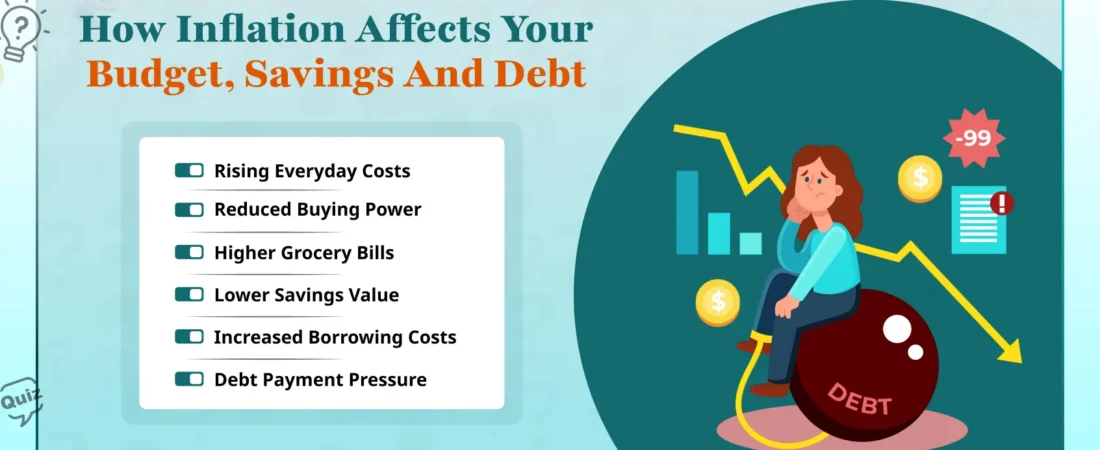
Inflation means prices are rising across the economy, so the same amount of money may buy fewer goods and services than before. It can affect your daily budget, savings goals, and debt strategy.
Impact on your budget
Food, housing, transportation, and utilities may take up a larger share of your income. Review your spending regularly, separate essential costs from optional purchases, and compare prices before renewing services.
Impact on savings
If your savings grow more slowly than prices, your purchasing power may decline. Keep emergency savings accessible and consider whether your savings products match your time horizon and risk tolerance.
Impact on debt
Fixed-rate debt usually has predictable payments, while variable-rate debt may become more expensive when interest rates rise. Focus on high-interest balances, make payments on time, and understand how rate changes affect your obligations.
Practical steps
- Update your budget when recurring costs change.
- Build or protect an emergency fund.
- Reduce avoidable fees and subscriptions.
- Compare borrowing costs before taking on new debt.
- Review financial goals at least once a year.
Inflation is difficult to control, but a flexible budget and regular reviews can help you respond thoughtfully.