
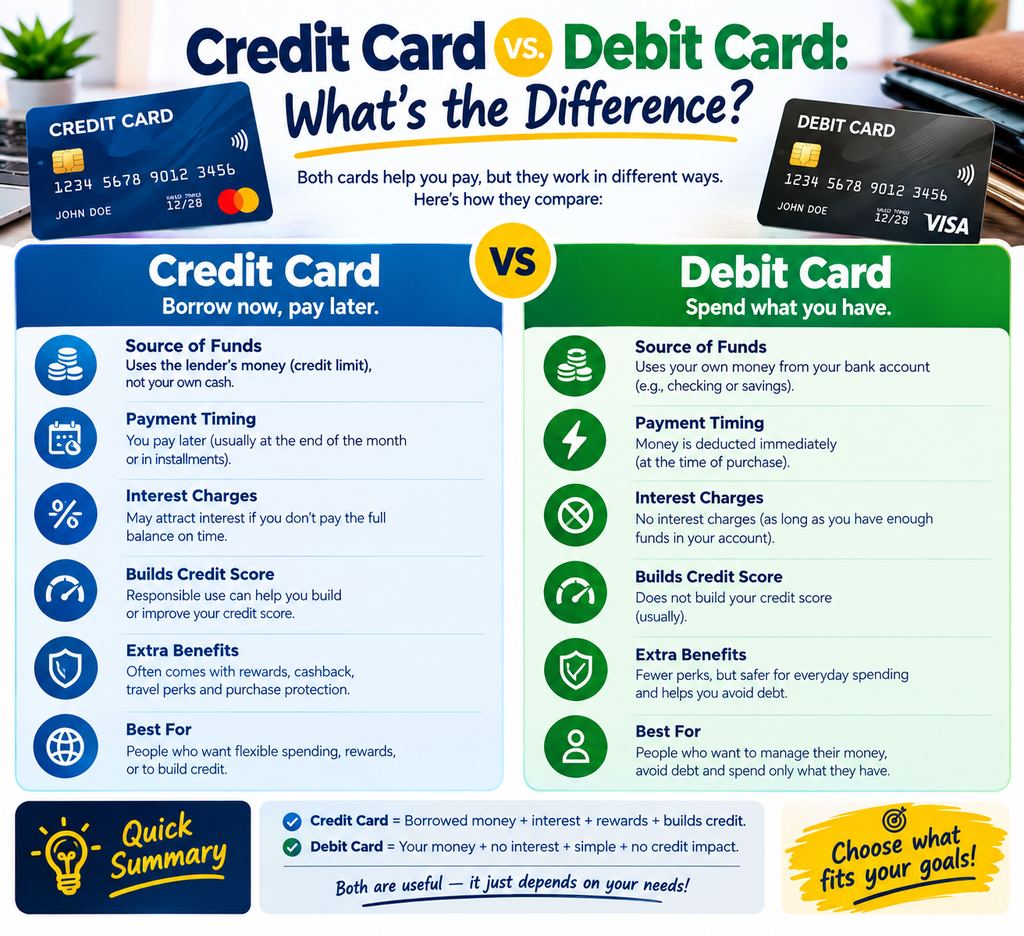
Credit cards and debit cards look similar and can both be used to pay for purchases, shop online, withdraw cash, and pay bills. However, the way they work is very different.
Understanding the difference between a credit card and a debit card can help you choose the right payment method for different situations and avoid unnecessary fees or debt.
The biggest difference is simple: a debit card generally uses money from your bank account, while a credit card allows you to borrow money from a lender and repay it later.
What Is a Debit Card?
A debit card is usually connected directly to your checking account. When you use it to make a purchase, the money generally comes from the available balance in your bank account.
For example, if you have $800 in your checking account and spend $50 with your debit card, your available balance will generally be reduced by that transaction.
Debit cards can be useful for everyday purchases because you’re spending money you already have rather than borrowing.
Benefits of Debit Cards
Debit cards have several advantages:
- You spend money directly from your bank account.
- There is generally no interest charge on ordinary purchases.
- They can help you stay within the money you have available.
- They are convenient for everyday purchases.
- They can be used for online and in-store shopping.
- You can often use them to withdraw cash from ATMs.
For people who want to avoid borrowing money, a debit card can be a straightforward payment option.
What Is a Credit Card?
A credit card provides access to a line of credit from a financial institution. Instead of taking money directly from your checking account when you make a purchase, you’re generally borrowing against your available credit.
For example, suppose your credit card has a $2,000 credit limit. If you make a $300 purchase, you may have approximately $1,700 of available credit remaining, depending on pending transactions and other activity.
You then receive a bill for the amount you owe.
If you don’t pay the full balance by the due date, interest may be charged according to the card’s terms.
The Main Difference Between Credit and Debit Cards
The easiest way to understand the difference is to think about where the money comes from.
Debit card:
Money generally comes directly from your bank account.
Credit card:
Money is borrowed from the credit card issuer and must be repaid.
This difference affects interest, credit history, rewards, fees, and how you manage your spending.
Credit Cards and Interest
One of the biggest differences between the two cards is the possibility of interest charges.
When you use a debit card, you’re generally using your own money, so ordinary debit purchases don’t create credit card-style interest charges.
With a credit card, carrying a balance can result in interest charges. The amount depends on the card’s terms and the balance you carry.
For example, if you make a $1,000 purchase and don’t pay the balance in full, interest could increase the amount you ultimately pay.
That’s why it’s important to understand the card’s annual percentage rate, commonly called the APR.
Credit Cards and Building Credit
Another important difference is that responsible use of a credit card can contribute to your credit history when the account is reported to credit bureaus.
Your credit history can affect your ability to qualify for certain loans and other financial products.
A debit card generally doesn’t build credit simply because you’re using it for purchases.
However, using a credit card doesn’t automatically improve your credit. Late payments, high balances, and other negative behavior can hurt your credit profile.
If you use a credit card, making payments on time and managing your balance responsibly are important.
Rewards and Benefits
Many credit cards offer rewards programs. Depending on the card, you may earn cash back, points, or travel rewards for eligible purchases.
Some cards may also offer additional benefits, such as purchase protections or travel-related features.
Debit cards may offer fewer rewards, although some banks provide debit-card rewards or other account benefits.
When comparing rewards, don’t focus only on the advertised benefits. Check annual fees, interest rates, spending requirements, and other terms.
Fraud Protection and Disputes
Both credit and debit cards can have protections against unauthorized transactions, but the rules and procedures can differ.
With a debit card, unauthorized transactions can affect money in your bank account while the issue is being investigated.
With a credit card, an unauthorized transaction generally affects your credit account rather than immediately removing money from your checking account.
You should monitor either type of card regularly and report suspicious transactions promptly.
Debit Card vs. Credit Card for Everyday Spending
A debit card can be useful when you want your purchases to come directly from your bank account.
For example, if you have $500 available for discretionary spending, using a debit card can make it easier to limit purchases to money you already have.
A credit card can also be convenient for everyday spending, especially for people who can consistently pay their statement balance in full and want to use rewards or other benefits.
The key is to avoid treating available credit as extra income.
What About ATM Withdrawals?
Both debit and credit cards can sometimes be used at ATMs, but they work differently.
A debit card can generally be used to withdraw money directly from your checking account.
Using a credit card to withdraw cash is typically considered a cash advance. Cash advances can have different fees and interest terms from ordinary purchases.
Before using a credit card at an ATM, check the card’s cash advance terms.
Fees to Watch For
Both card types can involve fees, although the fees vary by financial institution and card.
Debit Card Fees
Possible debit-related fees include:
- Out-of-network ATM fees
- Overdraft-related fees
- Foreign transaction fees
- Certain account service fees
Credit Card Fees
Possible credit card fees include:
- Annual fees
- Late payment fees
- Cash advance fees
- Foreign transaction fees
- Balance transfer fees
Always review the terms before choosing a card.
When Should You Use a Debit Card?
A debit card may make sense when:
- You want to spend money already in your bank account.
- You want to avoid borrowing for everyday purchases.
- You are working on controlling your spending.
- You don’t want to worry about credit card interest.
- You want direct access to your checking account.
However, you should still monitor your balance and protect your card information.
When Should You Use a Credit Card?
A credit card may be useful when:
- You want to build or maintain a credit history.
- You can manage your spending responsibly.
- You want to earn rewards.
- You need a payment method that provides a credit line.
- You can make payments on time and understand the card’s costs.
The most important rule is to borrow only what you can realistically repay.
Credit Card vs. Debit Card: Quick Comparison
| Feature | Debit Card | Credit Card |
|---|---|---|
| Money source | Bank account | Borrowed credit |
| Interest on purchases | Generally no | May apply if balance is carried |
| Builds credit | Generally no | Can contribute to credit history |
| Rewards | Sometimes | Often available |
| ATM access | Common | Cash advance may apply |
| Spending limit | Available account balance | Credit limit |
| Debt risk | Lower from ordinary purchases | Can accumulate if balances aren’t repaid |
| Monthly bill | Usually no credit bill | Yes |
Final Thoughts
Credit cards and debit cards are both useful financial tools, but they serve different purposes.
A debit card generally uses money you already have, while a credit card gives you access to borrowed money that you must repay.
Debit cards can be useful for keeping spending connected to your bank balance, while credit cards can provide rewards and help establish credit when used responsibly. However, credit cards can become expensive when balances are carried and interest accumulates.
Before choosing between the two, consider your spending habits, financial goals, and ability to manage payments. Understanding how each card works can help you make smarter everyday financial decisions and avoid unnecessary costs.