
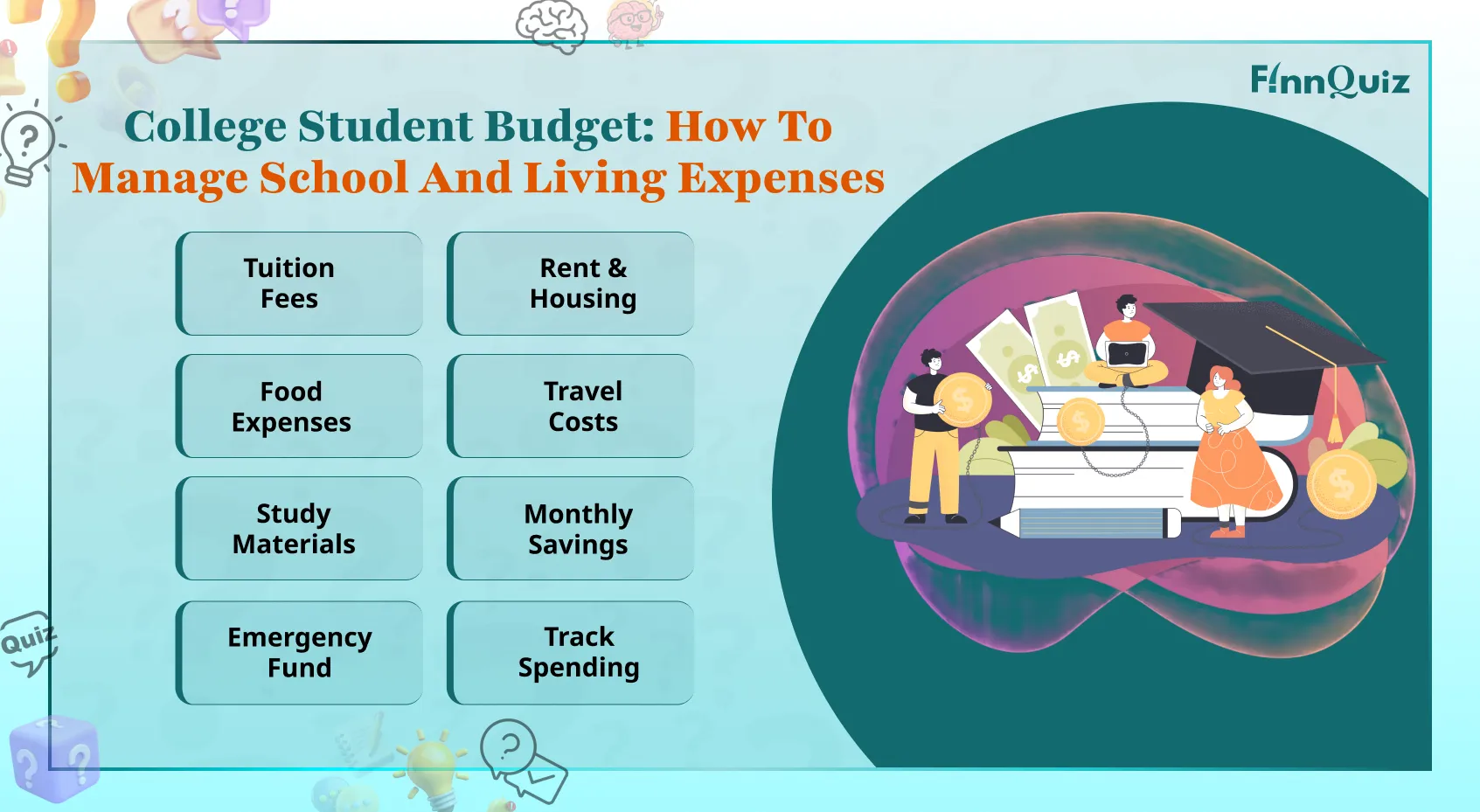
A college budget starts with knowing exactly how much money you have for the entire semester. That includes cash from a job, family support, financial aid refunds, scholarships, and savings. From that total, subtract your fixed school costs (tuition, fees, required books, housing if paid upfront) to see what is left for living expenses. Then divide that remaining amount by the number of months in the semester to get your monthly limit, and further break it into weekly amounts. Track every expense, separate needs from wants, build a small emergency buffer, and avoid credit card debt. If your income falls short, contact your school’s financial aid office for help—they can connect you with work-study, emergency grants, or other resources.
What a Semester Budget Looks Like
A semester budget is a plan for all the money you will receive and spend during one academic term—typically 15 to 16 weeks. Unlike a monthly budget, it forces you to think about large, infrequent costs (e.g., tuition, books) and irregular income (e.g., financial aid refunds, seasonal work). The goal is to spread your semester funds evenly over the weeks so you do not run out before finals.
Step 1: Calculate Your Total Semester Income
First, list every source of money you expect to receive during the semester. Common sources include:
- Part-time job or work-study earnings (net pay after taxes)
- Family support or allowances
- Financial aid refunds (after tuition and fees are deducted)
- Scholarships or grants that come directly to you
- Savings you plan to use
Use the amount that is actually available for spending, not the total financial aid award—subtract any tuition and fees that are paid directly to the school first. For irregular income (e.g., seasonal work), estimate conservatively based on the lowest expected amount.
Step 2: Identify Fixed Semester Costs
Fixed costs are expenses that you must pay—usually in a set amount—during the semester. These include:
- Tuition and mandatory fees (often paid before the semester starts)
- Housing (rent or dorm fees, if paid in a lump sum)
- Meal plan (if required by your housing)
- Course materials (textbooks, lab fees, art supplies, software)
If these are already deducted from your aid or paid upfront, subtract them from your total income first. The remaining amount is your living expense budget for the semester.
Step 3: Plan for Variable Living Expenses
Variable expenses are costs that occur regularly but may change each month. These include:
- Groceries and dining out
- Transportation (gas, bus passes, ride shares)
- Phone and internet bills
- Personal care (toiletries, laundry)
- Entertainment and social activities
- Clothing and supplies
- Subscriptions (streaming, apps)
Estimate these amounts based on past spending or typical costs in your area. Track your actual spending for the first two weeks to refine your estimates.
Step 4: Create a Monthly and Weekly Spending Limit
Once you know your total living expense budget, divide it by the number of months in the semester (usually 4 to 5). That gives your monthly limit. Further divide by 4.3 (average weeks per month) to get a weekly limit. This helps you avoid spending too much in the first month.
Worked Semester Budget With Uneven Income
This is a hypothetical example for illustration. Alex is a sophomore at a public university. Alex has the following semester income:
- Part-time job net pay: $1,200/month for 4 months = $4,800
- Financial aid refund after tuition/fees: $1,000
- Family support: $200/month for 4 months = $800
- Total semester income: $6,600
Fixed costs paid before the semester:
- Tuition and fees (already covered by financial aid)
- Housing (dorm and meal plan) paid upfront: $4,000
Remaining living expense budget: $6,600 – $4,000 = $2,600 for 4 months. Monthly limit = $650. Weekly limit ≈ $150.
Alex estimates monthly variable expenses:
- Groceries (eating some meals on campus): $200
- Dining out/coffee: $80
- Transportation (bus pass and occasional ride share): $60
- Phone/internet: $60
- Personal care: $30
- Entertainment: $50
- Subscriptions: $20
- Total variable: $500
Monthly limit = $650, so Alex has $150 leftover for savings or unexpected costs. Alex sets up a weekly check-in and tracks spending on a notes app. In the first month, Alex realizes dining out is $100, so Alex reduces it to $80 and redirects $20 to savings. After four months, Alex has built a $200 emergency buffer and stayed within the budget.
On-Campus vs. Off-Campus Housing Considerations
Housing is often the largest expense. On-campus housing usually includes a meal plan and utilities, with a predictable semester cost. Off-campus housing may have lower monthly rent but requires separate payments for utilities, internet, and groceries. Additionally, off-campus students often need to budget for transportation and may have to pay security deposits and first/last month's rent upfront. Compare the total semester costs carefully, including hidden expenses, before choosing.
Needs vs. Wants Table
| Category | Needs | Wants |
|---|---|---|
| Housing | Rent/dorm (shared, basic) | Private apartment, luxury dorm |
| Food | Groceries, basic meal plan | Eating out, delivery, premium coffee |
| Transportation | Bus pass, fuel for essential trips | Ride shares, parking fees |
| Phone/Internet | Basic plan for communication and study | Premium data, multiple streaming subscriptions |
| Entertainment | Free campus events, library resources | Concerts, paid apps, frequent outings |
Handling Financial Aid Refunds
If your financial aid exceeds your tuition and fees, the school issues a refund. This money is meant to cover living expenses—not extra spending. Divide the refund by the number of months in the semester to determine your monthly allowance, and stick to that limit. Avoid spending the refund as a lump sum; treat it like regular income.
Avoiding Credit Card Debt
Credit cards can be useful for building credit, but they are not extra income. If you use a credit card, pay the full statement balance each month to avoid interest. Never charge more than you can pay off with your monthly budget. If you are tempted to overspend, use a debit card or cash for discretionary purchases.
Managing Subscriptions and Discretionary Spending
Review subscriptions monthly. Many students pay for streaming services, apps, and gym memberships they rarely use. Cancel any that do not add enough value. For discretionary spending (eating out, entertainment), set a weekly limit and stick to it using cash or a separate account.
Building a Small Emergency Buffer
Even a small buffer—$50 to $100—can cover unexpected expenses like a textbook replacement, urgent transportation, or a minor medical copay. Keep this money in a separate savings account or a designated envelope. If you use it, make replenishing it a priority in the next month.
Revising the Budget When Circumstances Change
Life changes: you may lose a job, get a refund, or face unexpected costs. Revise your budget immediately. If your income drops, reduce variable expenses first (entertainment, dining out). If costs rise, look for campus resources (food pantry, emergency loans, work-study) and talk to the financial aid office. A budget is a living document—adjust it as needed.
When to Contact the Financial Aid Office
If your budget consistently shows a shortfall, do not ignore it. Contact your school's financial aid office to explore options: additional work-study, emergency grants, tuition payment plans, or adjustments to your aid based on changes in circumstances. They can also direct you to campus food banks, emergency housing, or student support services. Seeking help early prevents crisis.
Semester-Budget Worksheet
| Category | Amount ($) |
|---|---|
| Total semester income (after taxes) | ___ |
| Minus: Tuition/fees (if not already paid) | ___ |
| Minus: Housing/meal plan (if paid upfront) | ___ |
| Minus: Books/supplies (estimated) | ___ |
| Living expense budget (remaining) | ___ |
| Divide by months in semester | ___ |
| Monthly spending limit | ___ |
| Divide by 4.3 for weekly limit | ___ |
| Monthly variable expenses (groceries, transport, etc.) | ___ |
| Monthly savings/emergency buffer | ___ |
Weekly Money-Review Checklist
- Have I recorded all expenses from the past week?
- Is my actual spending within my weekly limit?
- If I overspent, what category can I reduce next week?
- Do I have any upcoming large expenses (books, travel, events)?
- Have I set aside my emergency buffer this week?
- Am I on track for the monthly total?
Common Mistakes and Consequences
- Spending financial aid refunds as a lump sum: You may run out of money mid-semester.
- Ignoring small daily purchases: Coffee, snacks, and ride shares add up to hundreds per month.
- Not tracking textbook costs: Buying new books at the campus store can cost double used or rental options.
- Using credit cards without a repayment plan: Interest charges compound and can lead to long-term debt.
- Failing to build an emergency buffer: A minor unexpected cost can cause panic or debt.
- Avoiding financial aid office contact: Students often miss out on available help by not asking.
Important Exceptions
Some students have dependents, ongoing medical expenses, or very limited income. In these cases, standard budgets may not cover all needs. Contact your school's student support services to learn about additional assistance programs, childcare subsidies, healthcare resources, and food assistance. Also, explore federal benefits like SNAP if you qualify. These resources are not always advertised, but they exist.
Build Your Semester Plan Before Classes Start
This week: calculate your total semester income and fixed costs. Next week: estimate your variable expenses and set a monthly limit. Set up a simple tracking system (notes app, spreadsheet, or budget app). Review your spending weekly and adjust. If you find a gap, talk to your financial aid office or look for campus jobs. After one month, evaluate your progress and refine your categories.