
Your 20s can be an exciting time financially. You may be starting your first full-time job, moving into your own home, paying bills independently, or beginning to think about long-term goals.
It is also a time when financial habits can develop quickly. Some mistakes may seem small at first but can become expensive if they continue for years.
The good news is that you do not need to have your finances completely figured out in your 20s. Learning basic money management and avoiding common mistakes can give you a stronger financial foundation for the future.
Here are some common money mistakes to watch out for.
1. Not Having a Budget
Without a budget, it can be difficult to know where your money is going.
You may earn enough to cover your expenses but still find yourself with very little money left at the end of the month.
A simple budget can help you understand your income, essential expenses, savings, debt payments, and discretionary spending.
Your budget does not need to be complicated. Start with a few major categories and adjust them as you learn more about your spending habits.
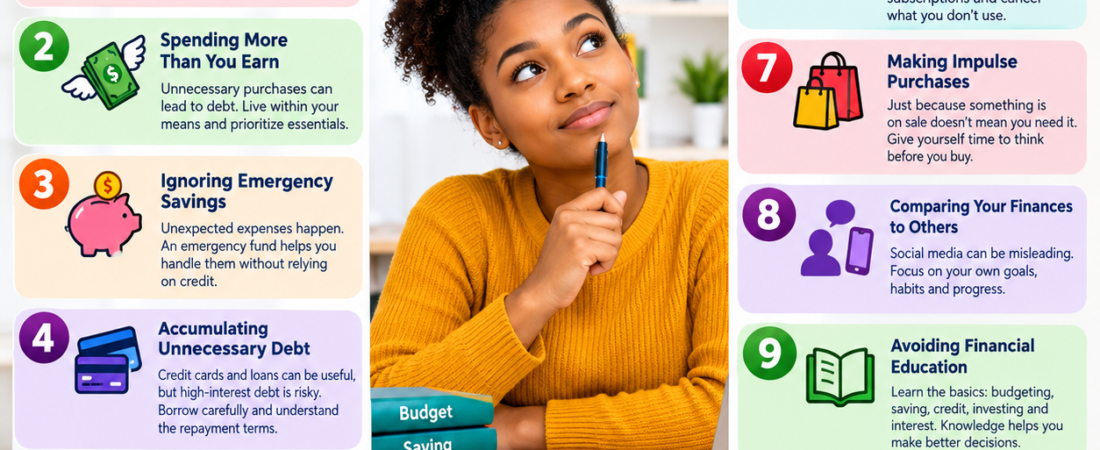
2. Spending Everything You Earn
Getting a higher-paying job can make it tempting to increase your lifestyle immediately.
You may move into a more expensive apartment, upgrade your car, eat out more often, or spend more on entertainment.
Improving your lifestyle is not necessarily a problem, but spending every extra dollar can make it difficult to build savings.
When your income increases, consider directing at least part of the additional money toward savings, debt repayment, or other financial goals.
3. Ignoring Emergency Savings
Unexpected expenses can happen at any age.
A car repair, medical expense, job interruption, or urgent household problem can create financial pressure if you have no savings available.
Start building an emergency fund with an amount you can realistically afford. Even a small reserve can provide useful financial flexibility.
As your income and savings improve, you can gradually increase your emergency fund.
4. Relying Too Much on Credit Cards
Credit cards can be useful financial tools when managed responsibly, but carrying high-interest balances can become expensive.
Avoid treating your credit limit as extra income.
Before using a credit card, consider whether you can comfortably repay the balance. Make required payments on time and understand the interest and fees associated with your account.
If you already have credit card debt, make a plan to reduce it while avoiding unnecessary new balances.
5. Ignoring Your Credit
Your credit history can affect future borrowing and other financial opportunities.
Develop good habits early by paying bills on time, keeping borrowing manageable, and checking your credit reports for inaccurate information.
You do not need to borrow money simply to build credit. If you use credit, focus on responsible management rather than trying to maximize how much you can borrow.
6. Delaying Retirement Savings Indefinitely
Retirement may seem very far away in your 20s, but starting early can give your savings more time to potentially grow.
If your employer offers a retirement plan or another suitable savings option, learn how it works and understand any employer contribution or matching arrangements that may apply.
You do not necessarily need to start with a large amount. Consistent contributions can help establish a long-term habit.
7. Not Tracking Your Spending
Many people know their monthly income but have little idea how much they spend on small purchases.
Coffee, food delivery, subscriptions, entertainment, and online shopping can add up.
Track your expenses for at least a month to see where your money is going.
You may discover spending patterns that you were not aware of and can then decide which expenses are worth keeping.
8. Buying Things to Impress Others
Social pressure can have a significant effect on spending.
You may feel tempted to buy expensive clothing, electronics, cars, or experiences because people around you have them.
However, your financial situation may be completely different from theirs.
Instead of trying to match someone else’s lifestyle, focus on your own income, responsibilities, priorities, and goals.
9. Ignoring Student or Other Debt
Debt can become easier to ignore when the required monthly payment seems manageable.
However, interest can make balances more expensive over time.
Keep track of what you owe, the interest rates, minimum payments, and due dates.
Create a realistic repayment plan and avoid taking on additional unnecessary debt while you are working toward reducing existing balances.
10. Failing to Plan for Irregular Expenses
Not every expense happens every month.
Annual insurance payments, car repairs, gifts, travel, moving costs, and other occasional expenses can catch you off guard if you do not plan for them.
Make a list of predictable irregular expenses and estimate their costs. Setting aside money regularly can make these expenses easier to handle.
11. Having Too Many Subscriptions
Subscriptions can seem inexpensive individually, but several recurring payments can consume a significant amount of money over time.
Review your subscriptions regularly.
Ask yourself whether you use each service enough to justify its cost. Cancel services you no longer need and check for annual renewals that you may have forgotten about.
12. Making Large Purchases Without Research
A major purchase can affect your finances for years.
Before buying a car, electronics, furniture, or other expensive items, compare prices and research the total cost.
Consider maintenance, insurance, repairs, financing costs, and other ongoing expenses rather than looking only at the purchase price.
Taking time to research can help you avoid expensive mistakes.
13. Trying to Invest Without Learning the Basics
Investing can be an important part of long-term financial planning, but it comes with risks.
Avoid putting money into an investment simply because someone online claims it will make you rich quickly.
Learn basic concepts such as diversification, risk, fees, time horizon, and compound growth.
Only invest money you can afford to leave invested according to your financial plan, and understand that investments can lose value.
14. Not Protecting Your Income
Your ability to earn money is one of your most important financial resources.
Depending on your circumstances, consider appropriate insurance and other forms of financial protection.
Keep important financial documents organized and make sure you understand the coverage you already have.
The specific types and amounts of insurance you need depend on your personal circumstances.
15. Waiting for the “Perfect” Time to Start
You do not need a high income or perfect financial situation before improving your money habits.
Start with what you can manage.
Create a basic budget, save a small amount, pay bills on time, reduce unnecessary spending, and learn about personal finance.
As your income and knowledge grow, you can make your financial system more sophisticated.
16. Comparing Your Financial Progress With Others
People reach financial milestones at different times.
One person may buy a home in their 20s, while another may focus on education, business, travel, debt repayment, or building savings.
Avoid assuming that someone else’s financial timeline should be yours.
Focus on making progress from your own starting point.
17. Not Having Financial Goals
Without clear goals, it can be easy to spend money without considering the future.
Choose a few goals that matter to you. They might include building an emergency fund, paying off debt, saving for a home, starting a business, or investing for retirement.
Give each goal a target and track your progress.
Conclusion
Your 20s are an excellent time to develop strong financial habits, but you do not have to be perfect. Mistakes are part of learning.
Focus on avoiding unnecessary debt, creating a realistic budget, building emergency savings, tracking your spending, protecting your financial information, and learning about long-term financial planning.
Most importantly, do not compare your financial journey with someone else’s. Start where you are, make practical improvements, and build habits that can support your goals as your life and income change.