
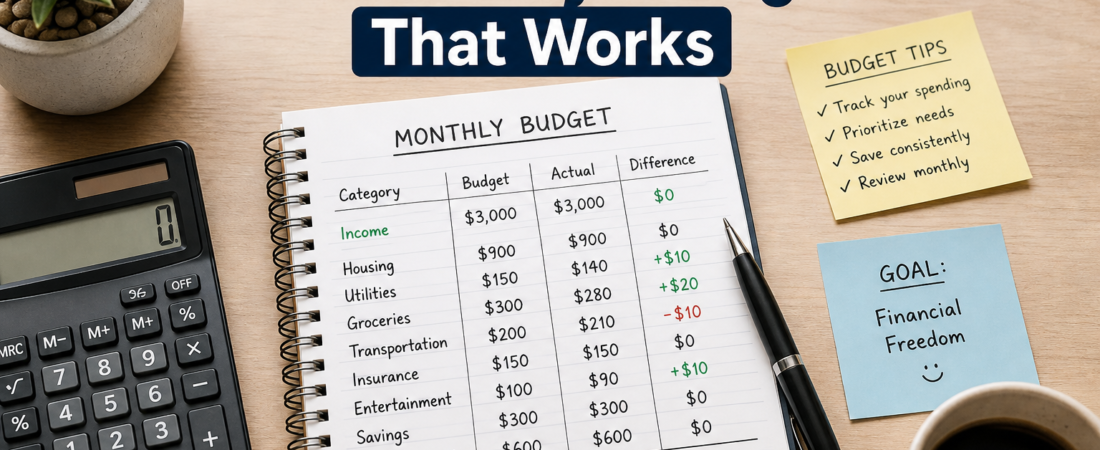
Creating a monthly budget is one of the simplest ways to take control of your finances. A good budget helps you understand where your money goes, plan for important expenses, reduce unnecessary spending, and make progress toward your financial goals.
However, a budget only works when it is realistic. If you create a plan that is too restrictive or difficult to follow, you may quickly give up. The key is to build a budget around your actual income, expenses, priorities, and lifestyle.
Here is a simple step-by-step guide to creating a monthly budget that you can actually maintain.
1. Calculate Your Monthly Income
Start by figuring out how much money you expect to receive each month.
If you have a regular salary, use your usual take-home pay rather than your gross salary. If you earn money from freelance work, a business, commissions, or other sources, estimate your income based on realistic figures.
If your income changes from month to month, consider using a conservative estimate. This can help prevent you from creating a budget based on money you may not actually receive.
2. List All Your Monthly Expenses
Next, write down everything you normally spend money on.
Start with fixed expenses, which generally stay similar each month. These might include:
- Rent or mortgage
- Insurance
- Internet
- Phone bills
- Loan payments
- Subscriptions
Then list variable expenses such as food, transportation, entertainment, shopping, and household items.
Do not forget less frequent expenses. Annual insurance payments, school costs, gifts, repairs, and other occasional expenses should also be considered.
3. Separate Needs From Wants
Not every expense has the same level of importance.
Needs are expenses that are necessary for your basic living and financial responsibilities. Wants are purchases that are enjoyable or convenient but not essential.
For example, groceries may be a need, while frequent restaurant meals may be a want.
This does not mean you have to eliminate all wants. Instead, separating the two categories helps you decide where your money should go first.
4. Set Spending Limits
Once you know your income and expenses, decide how much you want to spend in each category.
For example, you might create categories for:
- Housing
- Food
- Transportation
- Utilities
- Debt payments
- Savings
- Entertainment
- Personal spending
Your spending limits should be realistic. If you normally spend a certain amount on groceries, setting an extremely low grocery budget may make the plan impossible to follow.
It is better to create a realistic budget and gradually improve it than to create an unrealistic one that you abandon after a few weeks.
5. Give Savings a Place in Your Budget
Saving should be treated as part of your financial plan rather than something you do only when money is left over.
Choose an amount you can reasonably save each month and include it in your budget.
You can create separate savings goals for different purposes, such as an emergency fund, vacation, education, a vehicle, or a future home.
Even small contributions can become meaningful when you make them consistently.
6. Plan for Unexpected Expenses
A common budgeting mistake is assuming that every month will go exactly according to plan.
Unexpected expenses happen. A vehicle may need repairs, an appliance may break, or you may have an urgent personal expense.
Set aside some money for unexpected costs when possible. An emergency fund can also provide additional protection when something goes wrong.
Having money available for surprises can prevent you from relying on credit cards or loans to cover every unexpected expense.
7. Review Your Subscriptions
Subscriptions can easily become hidden expenses because many are automatically charged each month.
Go through your bank or card statements and identify recurring payments.
Ask yourself whether you still use each service. If you have several streaming platforms, apps, memberships, or other subscriptions that you rarely use, consider canceling the ones that are no longer valuable to you.
Small monthly savings can add up over an entire year.
8. Track Your Spending
Creating a budget is only the beginning. You also need to monitor how closely your actual spending matches your plan.
Record purchases as you make them or review your transactions regularly.
You can use a spreadsheet, budgeting app, notebook, or another method that is convenient for you.
Tracking your spending helps you identify patterns. You may discover that certain categories consistently cost more than expected.
9. Adjust Your Budget When Necessary
Your budget should not be treated as a permanent document that can never change.
If your rent increases, your income changes, or your priorities are different, update your budget.
For example, if you consistently spend more on groceries than expected, you may need to increase the grocery category and reduce spending somewhere else.
A flexible budget is easier to maintain than one that refuses to adapt to real life.
10. Use Separate Accounts for Different Goals
Some people find budgeting easier when they separate money for specific purposes.
You might have one account for regular spending and another for savings. You could also create separate savings goals for emergencies, travel, education, or major purchases.
The right approach depends on your financial situation and what makes money management easiest for you.
The main goal is to make it clear how much money is available for everyday spending and how much is reserved for other purposes.
11. Avoid Impulse Purchases
Impulse spending can quickly disrupt an otherwise good budget.
Before making an unnecessary purchase, give yourself some time to think about it. For larger purchases, consider waiting a day or longer before deciding.
Ask yourself whether you actually need the item, whether you can afford it, and whether the purchase fits your current financial goals.
A little planning can prevent many unnecessary purchases.
12. Create a Weekly Check-In
You do not have to wait until the end of the month to discover that you have overspent.
Spend a few minutes each week checking your accounts and reviewing your spending.
Look at what you have already spent and compare it with your remaining budget.
A short weekly review can make it easier to make adjustments before the month is over.
13. Make Your Budget Simple
A complicated budget can become difficult to maintain.
You do not need dozens of categories if they make the process confusing. Start with the major areas of your finances and add more categories only when necessary.
Your budget should be easy enough to understand that you can quickly see how much money is coming in, where it is going, and how much remains.
14. Give Yourself Some Spending Freedom
A budget should not make you feel like you can never enjoy your money.
Set aside a reasonable amount for entertainment, hobbies, eating out, or other personal activities.
Having some flexibility can make your budget more sustainable. The goal is not to eliminate enjoyment but to make sure discretionary spending fits within your overall financial plan.
15. Review Your Progress Every Month
At the end of each month, compare your budget with your actual spending.
Ask yourself:
- Which categories did I stay within?
- Where did I overspend?
- What unexpected expenses came up?
- How much did I save?
- What should I change next month?
Use the answers to improve your next budget.
Remember that a budget does not have to be perfect. It should become more useful as you learn more about your spending habits.
Conclusion
Creating a monthly budget that works starts with understanding your income and expenses. From there, prioritize essential costs, set realistic spending limits, include savings, prepare for unexpected expenses, and track your progress.
The best budget is not necessarily the strictest one. It is the one you can consistently follow while still allowing room for real-life expenses and personal enjoyment.
Start with a simple plan, review it regularly, and make adjustments when your circumstances change. Over time, budgeting can become a normal part of managing your money rather than something that feels overwhelming.