
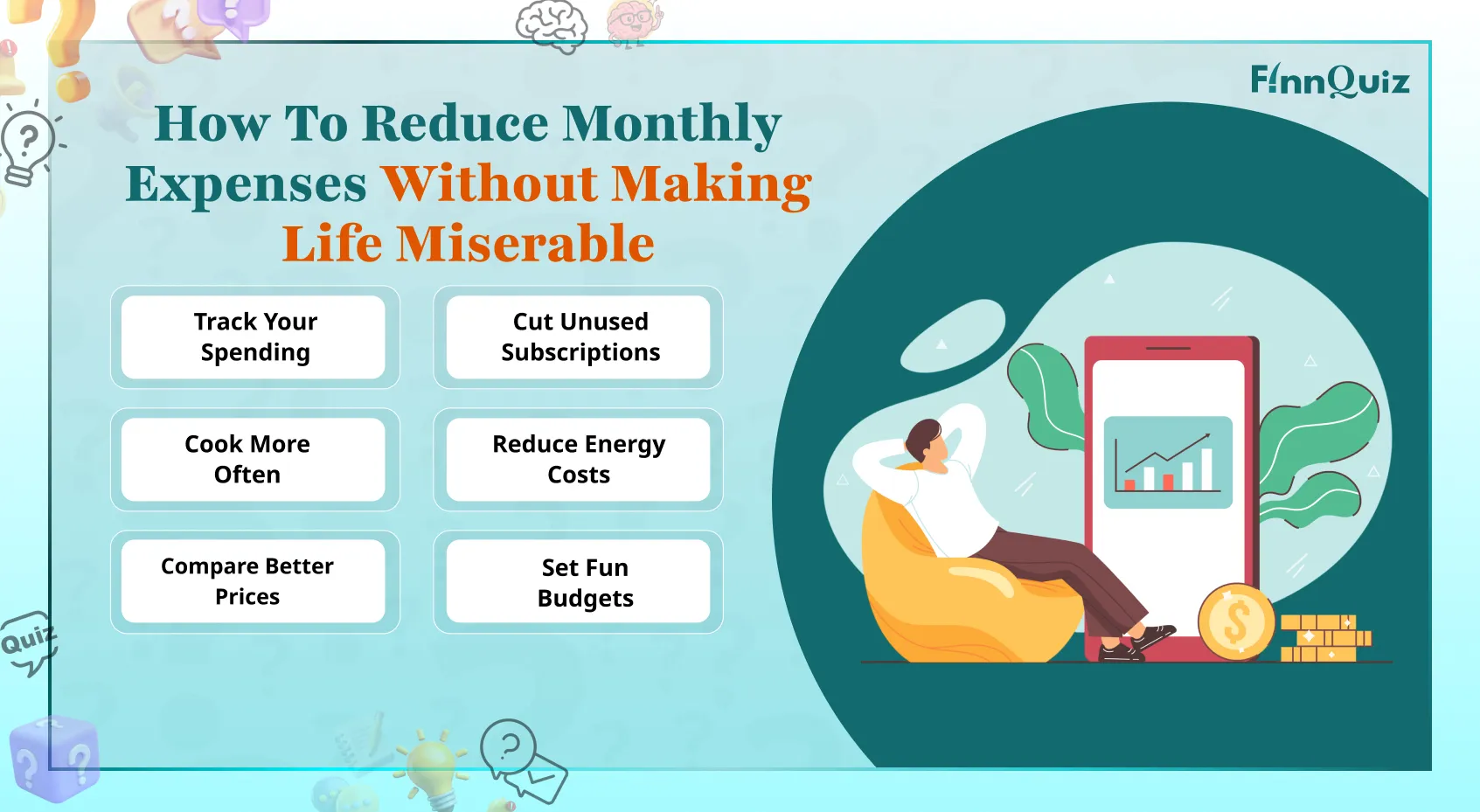
You can reduce your monthly expenses without giving up everything you love. The secret is to focus on waste and inefficiency—not on the things that genuinely add value to your life. Most households waste 10–15% of their income on forgotten subscriptions, inflated bills, impulse purchases, and energy leaks. Fixing these does not require a monk-like lifestyle. It requires a few smart habits, some negotiation, and a willingness to trade convenience for intentionality. This guide shows you exactly where to look and how to cut, so you can save hundreds each month while still enjoying your daily coffee, weekend outings, and favorite streaming shows.
What We Mean by 'Expense Reduction'
Cutting expenses is not about being cheap or depriving yourself. It is about eliminating spending that does not improve your life and optimizing the spending that does. For example, keeping a gym membership you never use is waste; keeping one you use daily is value. Paying full price for insurance when a competitor offers the same coverage for less is waste; paying a fair rate for reliable coverage is value. The goal is not to spend as little as possible—it is to spend intentionally, so every dollar works for you.
Why Most People Fail at Cutting Expenses
The most common mistake is trying to change everything at once—cutting all dining out, canceling every subscription, and swearing off shopping. This leads to deprivation, frustration, and eventual binge spending that wipes out any progress. Other pitfalls include:
- Cutting essential expenses like healthcare, quality food, or insurance instead of waste.
- Not tracking spending, so you don't know what to cut.
- Failing to negotiate recurring bills, leaving money on the table.
- Giving up after one bad month instead of adjusting the plan.
Sustainable expense reduction is about building small, consistent habits that compound over time. You do not have to be perfect; you just have to be intentional.
Step-by-Step: How to Reduce Expenses Without Misery
Follow these steps in order. Each step builds on the previous one, and none of them require extreme sacrifice.
Step 1: Track Your Spending for One Month
You cannot cut what you do not measure. For one month, record every single expense—every coffee, grocery run, subscription, and online purchase. Use a notebook, spreadsheet, or budgeting app. At the end of the month, categorize your spending: housing, food, transportation, insurance, utilities, subscriptions, entertainment, shopping, and miscellaneous. This data reveals your true spending patterns and highlights the categories with the most waste. For example, you might discover you spend $200 a month on takeout or $80 on unused subscriptions.
Step 2: Categorize Expenses as Fixed, Variable, or Waste
Separate your expenses into three groups: Fixed (rent, car payment, insurance—hard to change quickly), Variable (groceries, dining out, entertainment—flexible), and Waste (subscriptions you do not use, late fees, inflated bills—easy to eliminate). Focus first on Waste, then Variable, then consider Fixed only for long-term savings. This order ensures you get quick wins without feeling deprived.
Step 3: Eliminate the Obvious Waste
Start with the easiest cuts. Cancel any subscription you have not used in the past 30 days. Stop late fees by setting up automatic bill pay. Stop paying ATM fees by using your bank's network. Switch to no-fee banking. These actions yield immediate savings with zero lifestyle impact.
Step 4: Negotiate Your Recurring Bills
Many service providers—internet, cable, phone, insurance—offer discounts to retain customers. Call them annually and ask: "I'm considering switching providers. Can you offer me a better rate to stay?" In many cases, they will reduce your bill by 10–25%. A 15-minute phone call can save $20–$50 per month, year after year. Also shop for auto and home insurance annually; rates vary widely, and switching can save hundreds.
Step 5: Reduce Variable Expenses with Smart Swaps
Variable expenses are where you have the most control—and the most flexibility. Try these painless swaps:
- Food: Plan weekly meals, shop with a list, buy store brands, and reduce dining out by 1–2 meals per week. These changes can easily save $100–$200 monthly.
- Transportation: Combine errands, carpool once a week, check gas prices with an app, and keep your car maintained for better fuel efficiency.
- Utilities: Unplug electronics when not in use, switch to LED bulbs, adjust your thermostat by a few degrees, and use a programmable thermostat. These can save $20–$50 per month.
- Discretionary: Use the 24-hour rule for non-essential purchases, set a weekly fun budget, and use free entertainment (parks, libraries, community events).
Step 6: Automate Your Savings
Once you have freed up extra cash by cutting expenses, automate the difference. Set up an automatic transfer from checking to savings on payday. This ensures the savings happen without you having to think about it. You can also use round-up apps that save the spare change from your purchases.
Step 7: Review and Adjust Monthly
At the end of each month, review your progress. Did you stick to your new spending limits? Did you save as much as you expected? Adjust your budget for the next month—maybe you can cut a little more, or maybe you need to give yourself a bit more fun money. This iterative process keeps your budget realistic and sustainable.
Detailed Numerical Examples
Example 1: The Impact of Small Cuts
Let's say your monthly take-home pay is $4,000. By making these changes, you could save:
- Cancel unused subscriptions: $30/month
- Negotiate internet and insurance: $40/month
- Reduce dining out from 4 times to 2 times per week: $80/month
- Switch to store brands and meal plan: $50/month
- Reduce utility usage (LED bulbs, thermostat): $20/month
Total monthly savings: $220. Annual savings: $2,640. That is a meaningful emergency fund contribution, a vacation, or extra debt payment—with no major lifestyle change.
Example 2: Bigger Wins Over Time
Now consider tackling bigger expenses. Refinancing a mortgage from 6% to 5% on a $200,000 loan saves about $120/month. Shopping for car insurance could save $50/month. Combining these with the smaller cuts could yield $400+ per month in savings—nearly $5,000 annually. The effort: a few phone calls and some research.
Worked Example: Cutting Costs Without Cutting Every Category
In this hypothetical example, a household receives $3,800 per month and records $450 for dining out, $180 for subscriptions, and $350 for unplanned shopping. The goal is to find reductions that do not interfere with essential expenses or the categories the household values most.
She implements:
- Week 1: Cancels three unused subscriptions ($45/month) and calls her internet provider to get a $20/month discount.
- Week 2: Reduces dining out to twice a week (saving $100/month) and starts meal prepping on Sundays.
- Week 3: Switches to store brands for groceries and plans meals around sales (saving $40/month).
- Week 4: Sets a weekly fun budget of $50 for entertainment and shopping—she sticks to it, saving $150 from her previous shopping spend.
Total monthly savings: $45 + $20 + $100 + $40 + $150 = $355. Annual savings: $4,260. She feels no deprivation—she still enjoys meals out, still has entertainment, and still uses her favorite streaming services. She just stopped paying for things she did not use and made smarter choices on the rest. After one year, she has a fully funded emergency fund and is now saving for a down payment.
Comparison Table: Quick Wins vs. Long-Term Habits
| Strategy | Effort Level | Savings Potential | Lifestyle Impact |
|---|---|---|---|
| Cancel unused subscriptions | Low (15 min) | $20–$100/month | None |
| Negotiate bills | Low (15 min per call) | $20–$60/month | None |
| Meal planning and grocery swaps | Medium (weekly planning) | $50–$150/month | Low (more home cooking) |
| Reduce dining out | Low to medium | $50–$200/month | Moderate (fewer meals out) |
| Energy-saving habits | Low | $10–$40/month | None |
| Shop for insurance annually | Medium (research) | $30–$100/month | None |
| Use 24-hour rule for impulse buys | Low | $20–$100/month | Positive (less clutter) |
| Automate savings from cuts | Low (once) | Varies | Positive |
Common Mistakes and Their Consequences
- Cutting too much, too fast: Leads to feeling deprived and quitting. Start with waste, not joy.
- Cutting essential expenses: Reducing insurance coverage or skipping healthcare to save money can backfire catastrophically.
- Not tracking progress: Without seeing the savings, you lose motivation. Track your monthly savings and celebrate milestones.
- Failing to negotiate: Leaving easy money on the table. A 15-minute call can save hundreds annually.
- Ignoring small leaks: Daily coffee runs or snack purchases add up to thousands over a year. Small habits matter.
- Giving up after a bad month: One overspend is not a failure; it is data. Adjust and move forward.
Exceptions and Limitations
Not every expense is easy to cut. Fixed costs like rent or mortgage may not be reducible in the short term. In high-cost cities, housing may consume a larger portion of income, leaving less room. If you have high medical expenses or support dependents, your fixed costs are higher. The strategies in this guide are most effective for variable and discretionary spending. For fixed costs, consider longer-term options like moving, refinancing, or negotiating a rent reduction at renewal.
Also, some people may find that certain 'waste' expenses actually provide value—for example, a gym membership that keeps you healthy. Do not cut things that are essential to your well-being. The goal is not to eliminate all enjoyment; it is to eliminate waste and optimize the rest.
Practical Checklist
- Have you tracked your spending for at least one month?
- Have you separated your expenses into fixed, variable, and waste?
- Have you canceled any unused subscriptions?
- Have you negotiated your internet, cable, and insurance bills this year?
- Have you reduced dining out by at least one meal per week?
- Have you started meal planning and shopping with a list?
- Have you implemented any energy-saving habits (LED bulbs, thermostat adjustments)?
- Have you set a weekly or monthly fun budget for discretionary spending?
- Have you automated the transfer of your savings from the cuts you made?
- Do you review your progress monthly and make adjustments?
Run a 30-Minute Recurring-Bill Audit
This week: Track every expense—just observe, do not judge. Next week: Categorize and identify the top three waste categories. The following week: Cancel unused subscriptions and make one negotiation call. By the end of the month: Implement one change in each of the major categories (food, utilities, insurance, discretionary). At the end of month two: Review your total savings and automate the amount into a savings account. After three months: You will have a leaner, more intentional budget—and you will not miss a thing.