
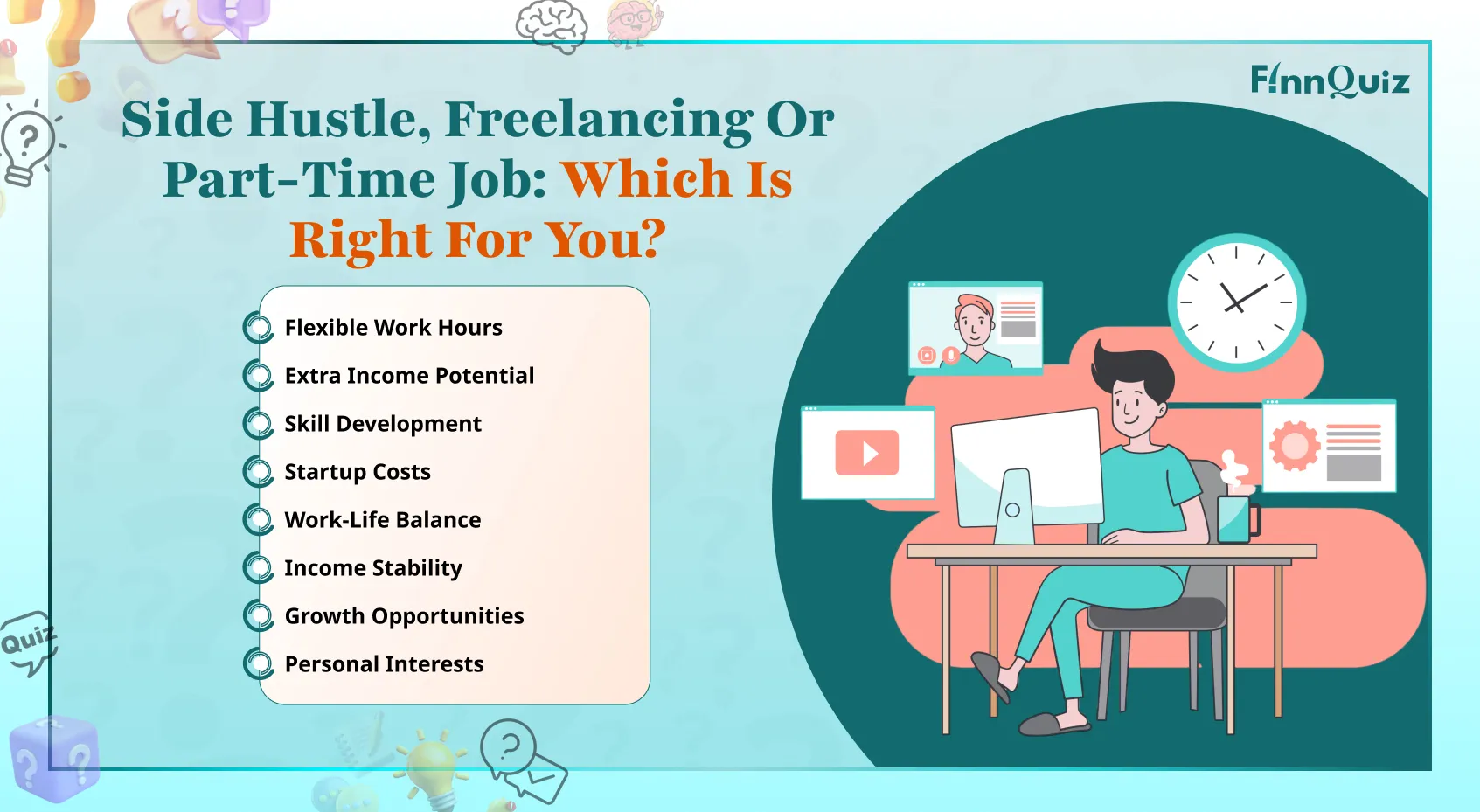
Extra income can come from a part-time job, freelancing, gig work, or selling products. Each option has different trade-offs: stability vs. flexibility, low startup vs. high potential, predictable hours vs. irregular schedules. The right choice depends on your available time, existing skills, financial goals, and tolerance for uncertainty. This guide compares the options realistically—including startup costs, income stability, taxes, and platform fees—and helps you decide which path fits your situation. It does not promise any specific income and is for educational purposes only.
Separate Gross Receipts, Net Income and Take-Home Pay
- Part-time job: W-2 employment with set hours, regular pay, and tax withholding. Often includes benefits like health insurance or 401(k) matching, though this varies.
- Freelancing: Independent contracting where you provide services to multiple clients. You set your rates and schedule but handle your own taxes, benefits, and client acquisition.
- Gig work: Short-term, flexible jobs through platforms (delivery, rideshare, task-based work). Income varies, and you are an independent contractor.
- Selling products: Offering physical goods (handmade, resold) or digital products (courses, templates) through online marketplaces or your own site.
- Passive income: Income from assets or systems that require minimal ongoing effort—but almost always requires significant upfront work or capital. It is rarely truly effortless.
- Self-employment tax: Social Security and Medicare taxes paid by freelancers and gig workers (currently 15.3% on net earnings).
- 1099-NEC: A form used to report non-employee compensation of $600 or more.
- Platform fees: Charges taken by marketplaces (Etsy, Upwork, DoorDash) as a percentage of your earnings.
The Options at a Glance
Before diving into details, here is a quick overview of the main options. The right choice depends on your circumstances.
- Part-time job: Stable hours, predictable pay, tax withholding, possible benefits. Limited flexibility and lower ceiling on earnings.
- Freelancing: Flexible schedule, higher hourly potential for specialized skills, but variable income and self-employment taxes.
- Gig work: Very flexible, low barrier to entry, but often lower pay after expenses, no benefits.
- Selling products: Can scale, but requires inventory, marketing, and shipping. Upfront costs vary widely.
- Hobby monetization: Starting with something you enjoy, but may take time to build a customer base and produce consistent income.
- Passive income: Usually requires significant upfront time or money; income may take months or years to build.
Part-Time Employment
A part-time job means working as an employee with a set schedule, often 10–30 hours per week. You receive a W-2 at year-end, and your employer withholds income tax, Social Security, and Medicare. This is the most stable option—you know exactly how much you will earn and when.
Pros: Predictable income, tax withholding (no estimated taxes), potential benefits (health insurance, retirement matching), clear boundaries between work and personal time, minimal startup costs.
Cons: Fixed schedule (less flexibility), limited earning potential (hourly wage), commuting and other job-related costs, may be harder to scale.
Best for: People who need stable, predictable income, prefer structure, or want benefits. Also good for those who do not want to manage self-employment taxes.
Freelancing
Freelancing means offering services to clients on a project or hourly basis. You are self-employed. You set your rates, choose your clients, and work when you want. You receive a 1099-NEC from clients who pay you $600 or more.
Pros: Flexible schedule, ability to set rates, higher earning potential for specialized skills, diverse work, can scale by raising rates or hiring help.
Cons: Income fluctuates (feast or famine), no benefits, self-employment tax, need to handle invoicing and client acquisition, may have periods with no work.
Best for: People with in-demand skills, who are self-motivated, can tolerate income variability, and value schedule flexibility.
Gig Work
Gig work includes platform-based jobs like rideshare driving, food delivery, or task-based services (TaskRabbit). You are an independent contractor, so taxes are not withheld.
Pros: Very flexible, low barrier to entry, start quickly, work when you want.
Cons: Pay can be low after vehicle expenses and platform fees (often 15–30%), no benefits, wear on vehicle, self-employment tax, unpredictable demand.
Best for: People who need immediate, flexible income and have a reliable vehicle or equipment. Often a good temporary option while building other skills.
Selling Products
This includes selling physical goods (handmade crafts, resold items, printed products) or digital products (courses, templates, e-books). Platforms like Etsy, eBay, and Shopify are common.
Pros: Can scale, passive potential for digital products, creative expression, no clients to manage.
Cons: Upfront costs for materials/inventory, platform fees (often 5–15%), shipping and returns, marketing needed, competition.
Best for: People who enjoy making or curating products, have a craft or skill, and are willing to handle inventory and shipping.
Hobby Monetization
Turning a hobby into income means using an activity you already enjoy—photography, cooking, writing, crafting—to earn money. It starts with passion but requires business skills to succeed.
Pros: Work you enjoy, can start with existing skills, creative satisfaction, potential to scale.
Cons: May blur line between passion and work, income may be inconsistent, learning business skills (pricing, marketing, taxes) takes time.
Best for: People with a marketable hobby who want to earn extra money while doing something they love.
The Reality Behind 'Passive Income'
Many people dream of passive income—money that comes in with little effort. In reality, truly passive income is rare. Most "passive" streams require significant upfront work, ongoing maintenance, or capital.
Examples: A digital product (course, e-book) requires research, creation, marketing, and updates. Dividend investing requires capital and research. Rental property requires management or property managers (which reduce returns). Even high-yield savings accounts are passive but have low returns.
Passive income is not a quick fix. It takes time, effort, and often money to build. Beginners should start with active income (freelancing, part-time job) and gradually build passive streams over years, not weeks.
Realistic Gross vs. Net Income Calculations
Your take-home income from any side work is not the same as the money you earn. You need to account for taxes, expenses, and platform fees.
Example 1: Part-time job (W-2). You earn $18/hour for 15 hours/week = $270/week gross. Taxes (federal income, Social Security, Medicare) are withheld. Assuming 15% total withholding, net pay is about $230/week or $920/month.
Example 2: Freelancing. At $40 per billable hour for 10 hours, gross receipts are $400. That is not take-home pay: subtract business expenses, unpaid administrative time, and a tax reserve calculated from expected net profit and the worker’s wider tax situation. A flat 25–30% reserve may be too high or too low, so this example does not state a net amount.
Example 3: Gig work. You earn $25/hour for delivery, but after fuel, wear on car, and platform fees (15–30%), your net may be $15–$18/hour before taxes.
Example 4: Selling products. Gross sales of $100 on Etsy, with platform fees (~10%), material costs ($30), shipping ($10), and returns (~5%), net profit is about $45–$50 before taxes.
These are hypothetical numbers for illustration. Actual results vary widely.
Startup Costs and Time Commitment Worksheet
| Option | Typical Startup Cost | Time to Start | Ongoing Time |
|---|---|---|---|
| Part-time job | $0–$50 (transportation, work clothes) | Days to weeks | Fixed weekly hours |
| Freelancing | $0–$200 (website, software) | Weeks to months | Variable, client-dependent |
| Gig work | $0–$100 (background check, supplies) | Days | As needed, per gig |
| Selling physical products | $50–$500+ (materials, inventory) | Weeks | Ongoing production, shipping, marketing |
| Selling digital products | $0–$200 (software, hosting) | Weeks to months | Low ongoing, occasional updates |
| Hobby monetization | $0–$200 (supplies, website) | Weeks to months | Ongoing production, marketing |
Worked Comparison: Three Ways to Earn an Extra $400
These are hypothetical examples for illustration.
Part-time-job illustration: 10 hours per week at $16 produces about $160 of weekly gross wages before withholding, commuting, meals, clothing, childcare, and other work-related costs. The worker compares the expected net amount and schedule with a $5,000 savings goal. The article does not assume a particular withholding amount, uninterrupted weekly hours, or that every dollar earned will be saved.
Jordan is a graphic designer with a full-time job ($4,200/month). Jordan has a portable skill and wants schedule flexibility. Jordan starts freelancing, charging $50/hour for design work. Jordan works 8 hours/week. Gross = $400/week. After setting aside 30% for taxes and subtracting software costs ($20/month), net is about $260/week or $1,040/month. Income varies—some weeks more, some less—but Jordan enjoys the flexibility and variety.
Taylor loves making candles and wants to turn it into extra income. Taylor invests $200 in supplies and starts selling on Etsy. Platform fees are 10%, shipping averages $8/order, materials cost $5 per candle. Taylor sells 10 candles/month at $25 each = $250 gross. Net = $250 - $25 (fees) - $80 (shipping) - $50 (materials) = $95/month before taxes. After a year, Taylor has built a small customer base and increased sales to $100/month net.
Comparison Table: Side Income Options
| Factor | Part-Time Job | Freelancing | Gig Work | Selling Products | Hobby Monetization |
|---|---|---|---|---|---|
| Income stability | High | Low | Low | Low to medium | Low |
| Flexibility | Low | High | High | Medium | High |
| Startup cost | Low | Low–Medium | Low | Medium–High | Low–Medium |
| Tax responsibility | Employer withholds | Self-employed (estimated taxes) | Self-employed | Self-employed (if active) | Self-employed |
| Earning potential | Limited by wage | Unlimited (rate × hours) | Limited by time | Scalable | Scalable |
| Benefits | Possible (health, 401k) | None | None | None | None |
| Platform fees | None | Usually none (except marketplaces) | 15–30% of earnings | 5–15% of sales | Depends on platform |
| Best for | Stability seekers | Skilled professionals | Quick, flexible cash | Creative producers | Passion projects |
Tax and Recordkeeping Basics
A W-2 employer generally withholds payroll and income taxes. A self-employed worker must keep records and report taxable income even when no information form arrives. Information-reporting thresholds and estimated-payment requirements can change and depend on the payment type and tax year. Calculate federal and state obligations from the current IRS instructions and expected net profit; do not assume that reserving 25–30% of gross receipts is correct for every person.
Scams and Unrealistic Income Promises
Be wary of any opportunity that: asks you to pay money to start working, promises high income with little effort, requires you to recruit others (MLM), or requests sensitive personal information early. Legitimate side work pays for actual work, not upfront fees. Research platforms on the Better Business Bureau or FTC's scam reporting site. If it sounds too good to be true, it probably is.
Common Mistakes and Consequences
- Underestimating time commitment: A side hustle takes more time than expected, leading to burnout.
- Ignoring taxes: Not setting aside tax money can result in a large bill and penalties.
- Undercharging: Beginners often undervalue their work, reducing net income.
- Relying on one platform or client: Losing them means losing income. Diversify.
- Falling for scams: Paying for training, materials, or "opportunities" is a common red flag.
- Not tracking expenses: Missed deductions mean paying more tax than necessary.
When Extra Work May Not Be Practical
Adding extra work is not always the right choice. If you are already stretched thin—working long hours, caring for family, or managing health issues—a side hustle may cause burnout. Also, if your primary job restricts outside work (e.g., non-compete clauses), check your employment contract. If you have high-interest debt, you may be better off focusing on reducing it rather than adding more income streams that increase your tax complexity. Always prioritize your health and primary responsibilities.
Decision Checklist
- What is my primary goal? (extra cash, skill building, long-term income?)
- How many hours per week can I realistically commit?
- What skills or products can I offer?
- Am I comfortable with income variability?
- Do I have the equipment or capital to start?
- Am I prepared to handle self-employment taxes?
- Have I researched potential platforms and their fees?
- Is my primary job protected (no conflicts)?
- Have I tested the idea on a small scale before investing heavily?
Test One Income Option for Four Weeks
This week: define your goal and available time. Next week: research 2–3 options using the checklist. The following week: test one option on a small scale—one freelance project, a few hours of gig work, or one product listing. Track your time and earnings. Calculate your net income after taxes and expenses. After 4–6 weeks, evaluate: is it worth continuing? If yes, scale gradually. If not, try another option. Always set aside tax money from the start.