
Latest posts
-
Where to Keep Your Emergency Savings
Building an emergency fund is one of the most important steps toward financial stability. It gives you money to use when unexpected expenses come up, such as a car repair, medical bill, job loss, or urgent home repair. However, saving the money is only part of the process. You also need to decide where to…
-
How to Save Money on a Low Income
Saving money can feel difficult when your income is limited. After paying for housing, food, transportation, utilities, and other essential expenses, there may seem to be little or nothing left to put into savings. However, saving on a low income is still possible when you focus on realistic goals, control unnecessary expenses, and develop consistent…
-
How to Automate Your Savings
Saving money is one of the most important habits you can develop for your financial future. However, knowing that you should save and actually saving consistently are two different things. Many people intend to save money every month but end up spending it on bills, shopping, entertainment, or unexpected expenses. One simple solution is to…
-
Short-Term vs. Long-Term Savings Goals
Saving money becomes much easier when you know exactly what you are saving for. Instead of simply putting money aside without a clear purpose, setting specific savings goals can help you stay organized, motivated, and focused. Savings goals can generally be divided into two categories: short-term goals and long-term goals. Both are important, but they…
-
How to Build an Emergency Fund From Scratch
Building an emergency fund is one of the most useful steps you can take toward improving your financial stability. Unexpected expenses can happen at any time, from a sudden car repair to an unexpected medical bill or a temporary loss of income. Without savings, these situations can quickly create financial stress. The good news is…
-
What Is an Emergency Fund and How Much Do You Need?
Unexpected expenses are a normal part of life. A car may need an expensive repair, a major appliance may stop working, an unexpected bill may arrive, or your income could temporarily decrease. Without money set aside for these situations, you may have to rely on credit cards, loans, or help from others. An emergency fund…
-
How Interest Works on a Savings Account
A savings account is one of the simplest ways to set money aside for future needs while potentially earning interest. Instead of keeping all your money in an account used for everyday spending, you can place some of it in a savings account and allow it to earn money over time. Understanding how savings account…
-
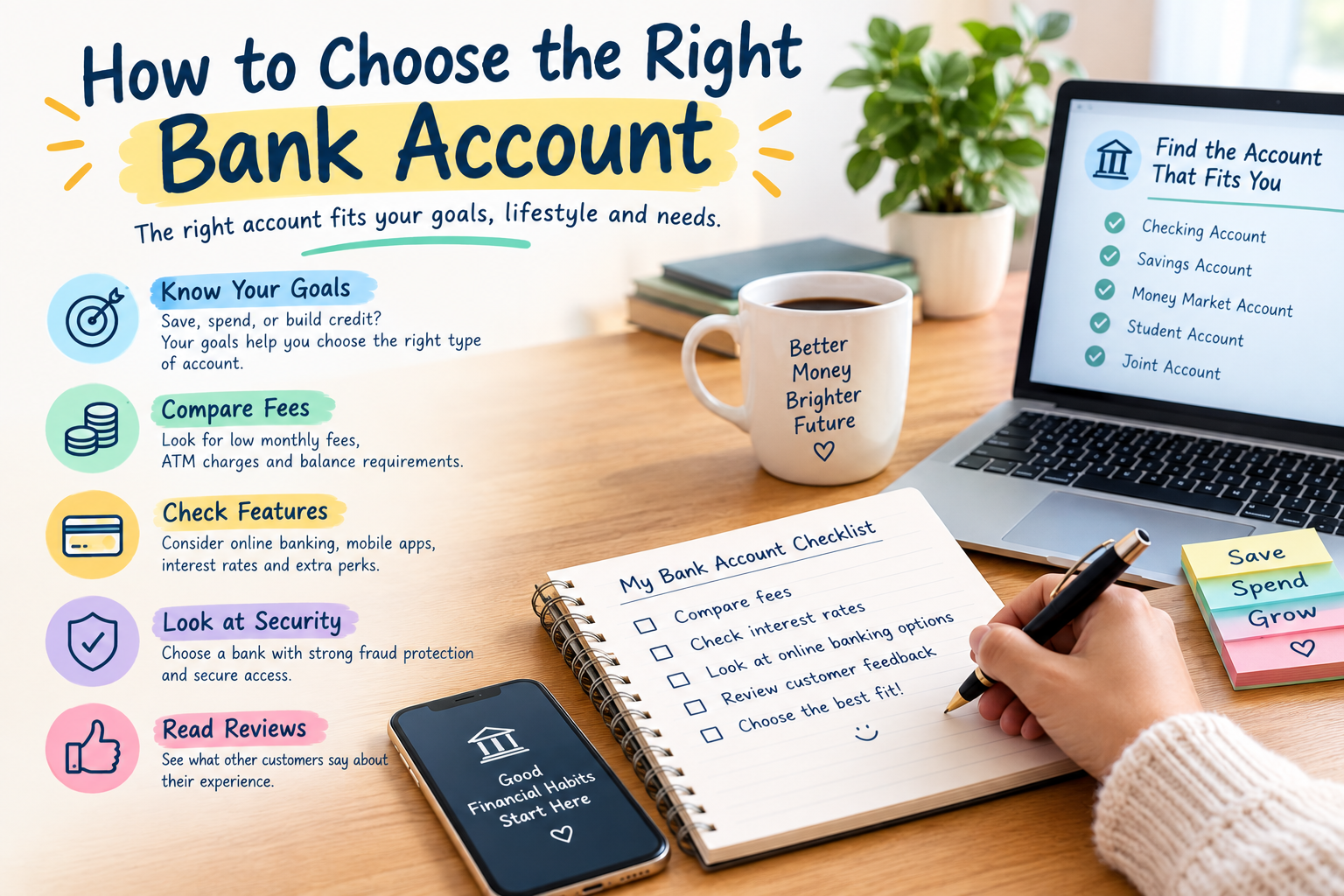
How to Choose the Right Bank Account
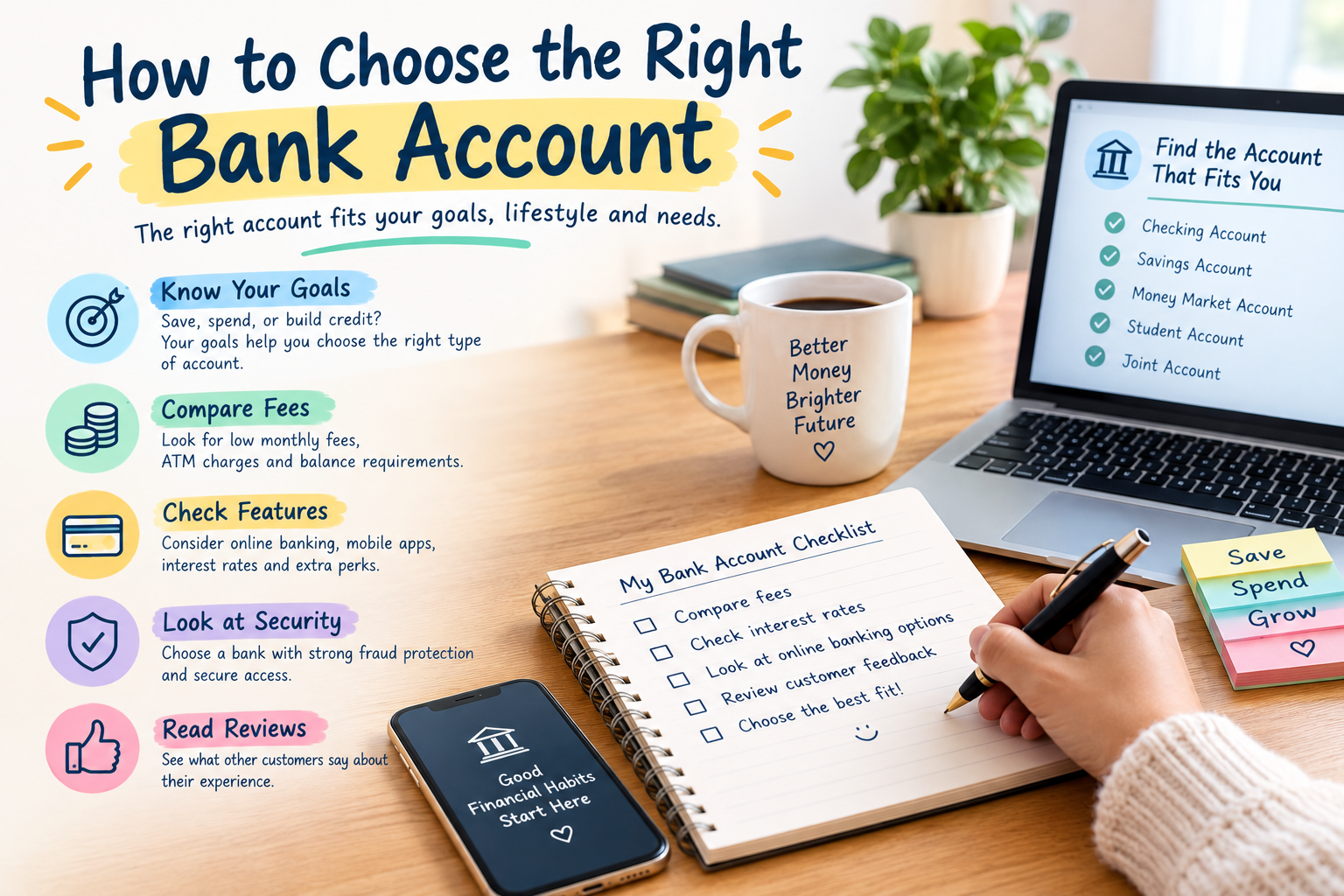
Choosing the right bank account is an important part of managing your personal finances. The account you choose can affect how easily you access your money, how much you pay in fees, and how much interest you earn on your savings. With so many banks and account options available, it can sometimes feel difficult to…
-
Checking Account vs. Savings Account: Key Differences
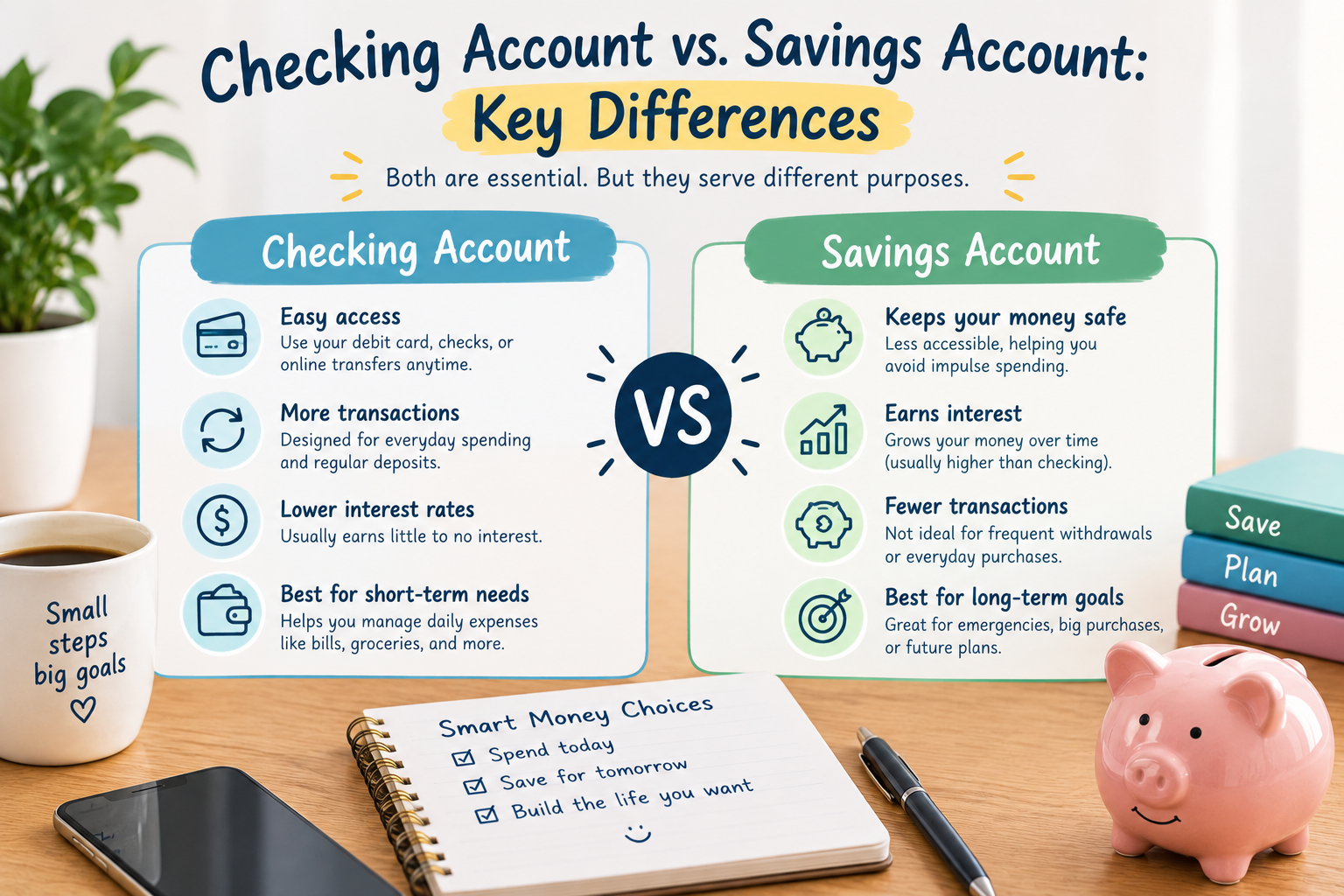
Managing your money becomes much easier when you understand where your money should be kept. Two of the most common bank accounts available are checking accounts and savings accounts. While both allow you to keep money safely at a financial institution, they serve different purposes. A checking account is generally designed for everyday spending and…
-
Simple Ways to Improve Your Financial Habits
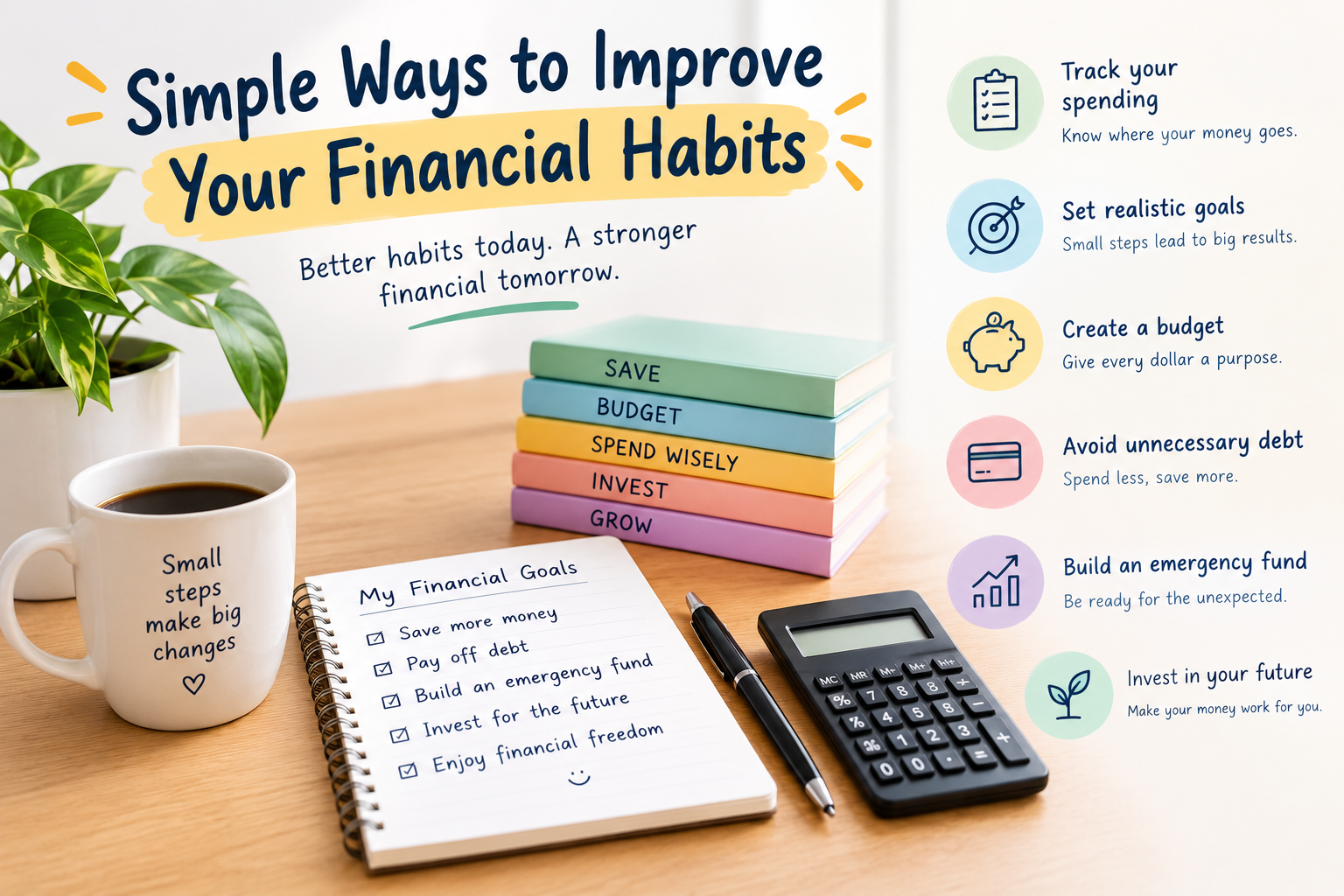
Good financial habits can make a major difference in your everyday life. You do not need to earn a huge income or make complicated investments to improve your finances. Small, consistent changes in the way you manage money can help you spend wisely, save more, reduce financial stress, and work toward your long-term goals. Many…